Who wants to become a doctor?
Evidently, not too many people, as this ToI report notes.
It takes ten years of sustained, punishing, high-risk training of the finest minds to make a trained specialist (obstetrician, surgeon, pathologist); fourteen if you want a 'super' specialist (cardiologist, brain surgeon). The results these days, despite the risk, can be quite impressive.
The only known 'de-risker' we know? The calibre and training of the mind-hand holding the scalpel.
About 15 years ago, Maharashtra created a new 'super-risk': a line of mantris and babus of the command-and-control dispensation, for whom doctors were slave labour.
Clever policies and incentives ensued: mandatory rural postings, endless exams, shifting universities, disappearance of teaching seats, and, of course, increasing reservations.
The finest minds have voted with their feet. Should we be surprised?
Showing posts with label reforms. Show all posts
Showing posts with label reforms. Show all posts
Saturday, May 09, 2009


Thursday, March 19, 2009
Why do we have such appalling bureaucrats?
http://www.dnaindia.com/report.asp?newsid=1240793
The epitome of this creed is the IAS, whose officers have no accountability to the people they are supposed to serve. This is, however, not surprising, since the IAS is the direct descendant of the Imperial Civil Service (ICS) whose sole intent was to keep the white man above the native, giving him free reign to exploit and suborn. Saheb was answerable only to the queen. We have merely replaced the white man with a brown one, the queen with the CM/PM.
Which explains Phatak's grossly callous statement.
The IAS is a failed institution, way past its expiry date. It needs to be taken behind a barn and shot. Roles like the 'MC' need to be handled by professional managers selected competitively and held in place with performance contracts. Incompetence such as this should ensure that the person remains unemployable for life.
Municipal commissioner Jairaj Phatak was criticised by the High Court for equating the case of a newborn that went missing from Sion Hospital to instances of stolen mobiles and ornaments on Wednesday....because our babus are not accountable to ordinary citizens in any way. At least netas have to get votes every 5 years!
The epitome of this creed is the IAS, whose officers have no accountability to the people they are supposed to serve. This is, however, not surprising, since the IAS is the direct descendant of the Imperial Civil Service (ICS) whose sole intent was to keep the white man above the native, giving him free reign to exploit and suborn. Saheb was answerable only to the queen. We have merely replaced the white man with a brown one, the queen with the CM/PM.
Which explains Phatak's grossly callous statement.
The IAS is a failed institution, way past its expiry date. It needs to be taken behind a barn and shot. Roles like the 'MC' need to be handled by professional managers selected competitively and held in place with performance contracts. Incompetence such as this should ensure that the person remains unemployable for life.
At long last -- Mumbai reforms her property tax system
http://www.indianexpress.com/news/south-or-suburbs-one-rule-for-assessing-prop.../436798/
This was an idea whos time has come a 20 years ago.
While still riddled with caveats and riders, this is a welcome move.
Linkage to capital value create buoyancy in the tax base, and mumbai will no longer have to depend upon constant increase in tax rates (the tax rate for commercial propoerties, for instance, was over 120%! -- like 97% income tax in indira gandhi's time) to fight inflation.
Now, how about the other property reforms the city sorely needs:
1. Sending Rent control where it belongs -- to the dust bin?
3. Repealing archaic laws like fixed FSI that throttle the supply of real estate and moving to a more rational system that frees space? (e.g. more FSI near transport hubs)?
4. Moving to a city master plan with simplified, rational bye laws for construction that use FSI as a motivator for realtors to give up land for creating open spaces and infrastructure?
2. Mapping all property parcels in the city down to cadastre into a visual, electronic database (such as a GIS)? This will allow efficient tax administration, ownership management and allows for total tax control, transaction control and also gives the administration full view into land usage?
Many more to come, for mumbai to even become a city worth living in!
But with ULCRA gone and taxes reformed, some glimmers of hope!
This was an idea whos time has come a 20 years ago.
While still riddled with caveats and riders, this is a welcome move.
Linkage to capital value create buoyancy in the tax base, and mumbai will no longer have to depend upon constant increase in tax rates (the tax rate for commercial propoerties, for instance, was over 120%! -- like 97% income tax in indira gandhi's time) to fight inflation.
Now, how about the other property reforms the city sorely needs:
1. Sending Rent control where it belongs -- to the dust bin?
3. Repealing archaic laws like fixed FSI that throttle the supply of real estate and moving to a more rational system that frees space? (e.g. more FSI near transport hubs)?
4. Moving to a city master plan with simplified, rational bye laws for construction that use FSI as a motivator for realtors to give up land for creating open spaces and infrastructure?
2. Mapping all property parcels in the city down to cadastre into a visual, electronic database (such as a GIS)? This will allow efficient tax administration, ownership management and allows for total tax control, transaction control and also gives the administration full view into land usage?
Many more to come, for mumbai to even become a city worth living in!
But with ULCRA gone and taxes reformed, some glimmers of hope!
Tuesday, February 17, 2009
On Gandhian fetishes
If the pre-poll sound bites are to be believed, one thing looks clear.
Irrespective of who wins the general elections in 2009, centers like mumbai will find things getting grimmer.
For no political party wants to focus on fixing things, choosing to fall back on tired, ruinous ideas and shibboleths.
The Congress has promised a return to nehruvian economics.
Which means incubus like state smothering that slows everything in its path to a crawl.,
Fair enough, we've lived under that with the UPA.
Not to be outdone, the BJP too wants to take india back to the stone age by resorting to Gandhian economics.
We leave the readers to enjoy the fruits of some other Gandhain policies. The reason gandhian policies fail is not because Gandhi was not a good man. Far from it.
The reason they fail is because the world is not full of men as good as him. Hence, they are motivated by baser notions like greed, fear etc. Gandhian policies fail because they're designed for an ideal world, not the real one.
1. The Gandhian fetish of "rural-ism" that posits that india is a country of villages.
Sure it is, but most villagers dont want it to be that way.
That, is immaterial to policy planners, who focus on choking cities of infrastructure..
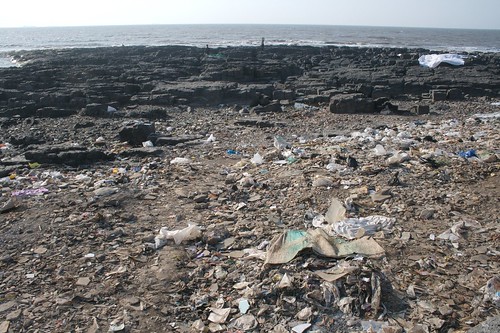
The result: Mumbai today


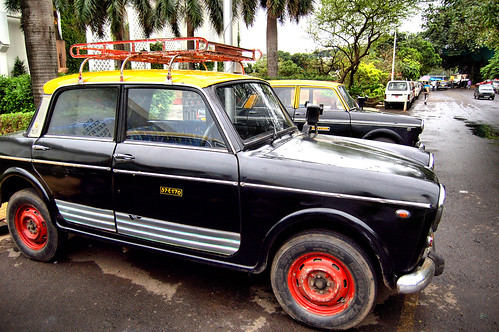
2. the Gandhian fetish of "do-it-yourself" or swadeshi.
The result:

3. The Gandhian fetish of "Non-violence", even when facing a murderous enemy.

Not one political party is talking about stuff that matters: such as making our institutions accountable for one.
Irrespective of who wins the general elections in 2009, centers like mumbai will find things getting grimmer.
For no political party wants to focus on fixing things, choosing to fall back on tired, ruinous ideas and shibboleths.
The Congress has promised a return to nehruvian economics.
Which means incubus like state smothering that slows everything in its path to a crawl.,
Fair enough, we've lived under that with the UPA.
Not to be outdone, the BJP too wants to take india back to the stone age by resorting to Gandhian economics.
We leave the readers to enjoy the fruits of some other Gandhain policies. The reason gandhian policies fail is not because Gandhi was not a good man. Far from it.
The reason they fail is because the world is not full of men as good as him. Hence, they are motivated by baser notions like greed, fear etc. Gandhian policies fail because they're designed for an ideal world, not the real one.
1. The Gandhian fetish of "rural-ism" that posits that india is a country of villages.
Sure it is, but most villagers dont want it to be that way.
That, is immaterial to policy planners, who focus on choking cities of infrastructure..
The result: Mumbai today

2. the Gandhian fetish of "do-it-yourself" or swadeshi.
The result:
3. The Gandhian fetish of "Non-violence", even when facing a murderous enemy.

Not one political party is talking about stuff that matters: such as making our institutions accountable for one.
Tuesday, December 23, 2008
Going to the dogs, literally
The Mumbai High Court recently passed a landmark judgment - the Brihanmumbai Municipal Corporation (BMC for short) can now cull stray dogs, especially if they are a nuisance.
This is a welcome move, and a long-overdue rescinding of the very unfortunate blanket ban on culling that was introduced over a decade ago. Since then, the number of strays in mumbai has skyrocketed, with numbers such as 60,000 - 4,00,000 being trotted around!
Of course, sundry animal rights activists are aghast. This is not surprising -- for their very existence is totally dependent on the perpetuation of the nuisance of stray dogs.
And a nuisance is what it is -- over 18,000 people fall victim to dog bites every year in Mumbai. This is merely the number a) reported and b) in government hospitals. The real number is likely to be much higher. Strays also pose a real threat in other ways -- they harass pedestrians, bite children and 'gang bark' through the night -- depriving citizens of sleep.
As a result, strays are persona non grata all over the world. If found, they are impounded, handed over to volunteer animal lovers to keep as pets within their premises. Those that are not 'rehabilitated' are put down with lethal injection or other humane options.
So why did the HC have to pass this judgment, that too to fix a silly 'no kill' rule that had prevailed for some 15 years?
Like all debates in Mumbai, this one too is an example of how powerful, connected vested interests can corner a decerebrate administration into misgovernance.
Disallowing killing of strays was a blatant piece of misgovernance -- because it placed the safety of stray dogs over that of the populace.
The way to get this is to use one of the oldest tricks in the book to fool the saamanya nagarik: re-frame the problem. 'Stray activists', whose survival depends upon these mutts reframed the argument as a "animal rights" argument. The saamanya nagarik, unsure how to respond, agrees, that animal rights need to be protected. A few ask tough questions, but their voices are soon drowned out. Flood the newspapers with photos of singlet wearing girls holding animal rights logos and you have a fait accompli.
However, ours is a system with checks and balances -- and justice, even though slow, grinds exceedingly fine.
But the battle is not over yet -- 'stray activists' may even hold a dharna in front of Vilasrao Deshmukh (or his replacement, i forget his name) to pass a 'let strays remain stray' ordinance. Bolstered by images in ToI, He may oblige.
This story is an exact rehash of the Mumbai taxi story -- 15 million mumbaikars cannot get safe, clean, transparent taxi services because 55,000 existing cabbies want the status quo to remain.
So how do we get out of this -- how do we save Mumbai from itself?
Simple: vote in an administration that will place the interests of all citizens above the interests of specific identities.
That means voters must vote for leaders who promise governance, not distribution of scarcity on identity-based criteria (free power for x, college seats for y, you know the spiel).
That means a literate, economically aware populace that can make the tradeoff between short-term issues and long-term improvements.
Till then, be prepared to travel in a dirty, bone jarring, rickety old taxi, a stray dog in tow.
This is a welcome move, and a long-overdue rescinding of the very unfortunate blanket ban on culling that was introduced over a decade ago. Since then, the number of strays in mumbai has skyrocketed, with numbers such as 60,000 - 4,00,000 being trotted around!
Of course, sundry animal rights activists are aghast. This is not surprising -- for their very existence is totally dependent on the perpetuation of the nuisance of stray dogs.
And a nuisance is what it is -- over 18,000 people fall victim to dog bites every year in Mumbai. This is merely the number a) reported and b) in government hospitals. The real number is likely to be much higher. Strays also pose a real threat in other ways -- they harass pedestrians, bite children and 'gang bark' through the night -- depriving citizens of sleep.
As a result, strays are persona non grata all over the world. If found, they are impounded, handed over to volunteer animal lovers to keep as pets within their premises. Those that are not 'rehabilitated' are put down with lethal injection or other humane options.
So why did the HC have to pass this judgment, that too to fix a silly 'no kill' rule that had prevailed for some 15 years?
Like all debates in Mumbai, this one too is an example of how powerful, connected vested interests can corner a decerebrate administration into misgovernance.
Disallowing killing of strays was a blatant piece of misgovernance -- because it placed the safety of stray dogs over that of the populace.
The way to get this is to use one of the oldest tricks in the book to fool the saamanya nagarik: re-frame the problem. 'Stray activists', whose survival depends upon these mutts reframed the argument as a "animal rights" argument. The saamanya nagarik, unsure how to respond, agrees, that animal rights need to be protected. A few ask tough questions, but their voices are soon drowned out. Flood the newspapers with photos of singlet wearing girls holding animal rights logos and you have a fait accompli.
However, ours is a system with checks and balances -- and justice, even though slow, grinds exceedingly fine.
But the battle is not over yet -- 'stray activists' may even hold a dharna in front of Vilasrao Deshmukh (or his replacement, i forget his name) to pass a 'let strays remain stray' ordinance. Bolstered by images in ToI, He may oblige.
This story is an exact rehash of the Mumbai taxi story -- 15 million mumbaikars cannot get safe, clean, transparent taxi services because 55,000 existing cabbies want the status quo to remain.
So how do we get out of this -- how do we save Mumbai from itself?
Simple: vote in an administration that will place the interests of all citizens above the interests of specific identities.
That means voters must vote for leaders who promise governance, not distribution of scarcity on identity-based criteria (free power for x, college seats for y, you know the spiel).
That means a literate, economically aware populace that can make the tradeoff between short-term issues and long-term improvements.
Till then, be prepared to travel in a dirty, bone jarring, rickety old taxi, a stray dog in tow.
Friday, October 12, 2007
Becoming literate more expensive than becoming a doctor?
India's Education tragedy continues.
And Arjun Singh wants to continue meddling with the IITs and the IIMs.
Of course, we all know why -- seats at these schools are a powerful tool for political patronage.
In contrast, making functional primary education requires real work -- as you need to create millions of them to educate the hundreds of millions of Indian Children.
When the Government, despite focusing on Uiversities like a hawk, has still failed to create enough capacity, can it, by any stretch of imagination, ever provide enough Primary Education?
Education in India is the largest remaining bastion of the License Raj, propped up by rabidly discriminatory laws like Article 30 and surrounded by an impressive ring of lies, half truths and emotionally wrenching but factually empty statements (Private education will be too expensive. Education is too important to be given to the rapacious private sector. Private companies will fleece the poor etc. etc.).
This bastion must fall, for India to get anywhere. Otherwise, no amount of hand-wringing, staring at the demographic bulge, exhorting Indian businesses and companies or calling for innovation is going to help.
I despair.
Families in India have to spend a considerable amount on the primary school education of their children, making the fundamental right to basic education a distant dream, according to a recent UNESCO report. In contrast, university education remains subsidised and costs just half of the primary school spending.Take a deep breath, and read that again: going to School is twice as expensive as going to University. This when a University education can pay for itself (by making you qualified for more skileld jobs)and hence be rendered as a fee-for-service.
And Arjun Singh wants to continue meddling with the IITs and the IIMs.
Of course, we all know why -- seats at these schools are a powerful tool for political patronage.
In contrast, making functional primary education requires real work -- as you need to create millions of them to educate the hundreds of millions of Indian Children.
When the Government, despite focusing on Uiversities like a hawk, has still failed to create enough capacity, can it, by any stretch of imagination, ever provide enough Primary Education?
Education in India is the largest remaining bastion of the License Raj, propped up by rabidly discriminatory laws like Article 30 and surrounded by an impressive ring of lies, half truths and emotionally wrenching but factually empty statements (Private education will be too expensive. Education is too important to be given to the rapacious private sector. Private companies will fleece the poor etc. etc.).
This bastion must fall, for India to get anywhere. Otherwise, no amount of hand-wringing, staring at the demographic bulge, exhorting Indian businesses and companies or calling for innovation is going to help.
I despair.
Thursday, September 27, 2007
SC tells Singh Parivar to focus on Primary Education
The Supreme Court is one of the few bastions of common sense in India.
Reflecting its common sense, it has asked a reasonable question: Why this undue haste to mess with the II (T+M)s when Primary Education is such a shambles?
Come on, your honours, you know the reason:
Because fixing Primary Education will require real work -- and real reform, including allowing private participation in Education.
The tokenist UPA has made no real reforms -- as the expose of Lalu's Railway turnaround also reveals (more like a run-aground, if you ask me).
On the other hand, continuing to meddle and micromanage higher education brings significant benefits -- political patronage, being the most important. Imagine being able to stand up in front of a crowd of "the disenfranchised" -- whoever that is -- and saying "your sons and daughters now have spots in the IIMs!"
Of course, only 10 of them will ever make it there, even as millions of "the disenfranchised" remain illiterare. But that rocks the vote!
The SC has demonstrated its solid common sense yet again. However, it should not hold its breath -- desperados of the Singh Parivar (MMS, Arjun etc.) have little to no interest in reforming Education. That'd be like shooting the chicken of continued poverty that lays the electoral golden egg!
Reflecting its common sense, it has asked a reasonable question: Why this undue haste to mess with the II (T+M)s when Primary Education is such a shambles?
Come on, your honours, you know the reason:
Because fixing Primary Education will require real work -- and real reform, including allowing private participation in Education.
The tokenist UPA has made no real reforms -- as the expose of Lalu's Railway turnaround also reveals (more like a run-aground, if you ask me).
On the other hand, continuing to meddle and micromanage higher education brings significant benefits -- political patronage, being the most important. Imagine being able to stand up in front of a crowd of "the disenfranchised" -- whoever that is -- and saying "your sons and daughters now have spots in the IIMs!"
Of course, only 10 of them will ever make it there, even as millions of "the disenfranchised" remain illiterare. But that rocks the vote!
The SC has demonstrated its solid common sense yet again. However, it should not hold its breath -- desperados of the Singh Parivar (MMS, Arjun etc.) have little to no interest in reforming Education. That'd be like shooting the chicken of continued poverty that lays the electoral golden egg!
Saturday, September 08, 2007
Prime Minister's Independence Day Address -- Part 3
Economic Development [Continued from previous post]
This Government believes that the role of Government in economic activity is not that of a principal industry player or provider, because Government has neither the expertise, nor the capacity to run each and every sector.
Instead, the Government's role in this area should principally be safeguarding the interest of the single largest community -- consumers.
Hence, my Government, over the next 5 years, and in particular, over the next 100 days will begin the process of relinquishing Government control and management of several such companies while establishing strong regulatory mechanisms -- such as self-funded independent regulators.
Depending upon the scale of the Government-owned enterprise in question, small assets (those below 1 billion dollars in value) will be put under public ownership on our capital markets directly.
The divestment of larger companies will be overseen by Special Purpose Vehicles (SPVs) that will oversee the gradual transfer of management and assets to professional management. Some of these companies include National airlines, state-owned metal and mining companies and entities like the Food Corporation of India.
In line with our overall economic thinking, we believe that while the services of these companies are important (e.g. FCI provides basic rations to our poorest citizens), Government can not and should not be running them as monopolies. Hence, some of these companies, will not be sold en bloc but as de-merged agencies that will have to compete for resources (e.g. such as food vouchers).
Finally, even as the Government reduces its role in running enterprises, some enterprises operate in sectors of vital strategic importance. These include companies in sectors associated with natural resources (water, minerals) and energy (e.g. oil and gas) and with some critical national installations (e.g. Ports).
We believe that like in other sectors, daily management of these companies should not be a concern of the Government, but, given their strategic importance, Government should continue to own them in significant measure.
To ensure strong strategic management of these companies, ownership of these companies will be divested from their parent ministries and transferred to a holding company that is responsible for the management of these entities. We believe this separation of company ownership from the regulating ministry is essential to establish an 'arms length' relationship. This is to ensure that no player gets privileged access, ensuring a level playing field.
These holding companies will be placed under the direct management of Bharat Uday -- a Sovereign Strategic fund that will own these government assets. Bharat Uday will be staffed with the best and brightest Indians who will be tasked with professionalising the management of these companies to ensure that they compete with the best companies in the nation while earning the Government top-quartile returns. Returns from companies owned by Bharat Uday will be utilised to further strategic interests by investing in vital assets worldwide -- such as oil and gas reserves.
To ensure Bharat Uday meets its strategic objectives, it will be accountable directly to the Prime Minister and the Cabinet. We believe such a construct will add an altogether new dimension to India's National Interest -- that of Strategic Security earned by Economic power, in addition to military power.
Social Reforms
Finally, my Government will extend its philosophy of establishing clear roles for Government (regulator, provider or financier) to the Social Sector.
We believe that in the Social sector, the role of Government is exclusively as a regulator that establishes a fair and level playing field for all citizens -- irrespective of their differences.
To that end, my Government will focus on reforming or, in some cases, altogether eliminating rules and laws that create distortions, driving wedges between peoples.
It is my belief that initiatives designed to address perceived deficiencies or weaknesses of communities or sectors of society by providing selective benefits against these perceived deficiencies have only succeeded in highlighting these deficiencies, driving a wedge among communities.
For instance, laws such as Article 30 -- expressly discriminate against Hindus by disallowing Hindu organisations from running Schools and Colleges, simply because they are a majority.
This has effectively made Hindus a disadvantaged community, dependent upon Schools operated by other communities for their education. In addition to being discriminatory, such policies artificially reduce the number of schools in our nation.
However, merely removing discrimination is not enough: government must also actively enforce fairness and justice.
Hence, even as social services are given additional freedom, they will now be expected to conform to regulation. Just as our companies must meet norms of probity and accountability, so must our social sector. To that end, a social sector regulator will be established to ensure that all Social organisations -- NGOs, Religious institutions of all denominations and not-for-profit institutions will be required to declare their accounts and activities to the public, in a prescribed format.
This is particularly important, given alarming evidence of the involvement of several NGOs and religious institutions in activities detrimental to India's -- and her citizens' -- welfare and security.
These are our priorities for the next five years: security, education, healthcare, economic development and social sector reform.
In conclusion, India embarks on another illustrious year in her dramatic 6,000 year history. All the Indians I have spoken to in the past few months have been clear that they want this year to be different. A year when we shall promise to our children -- and their children -- an India of unparalleled security, prosperity and opportunity.
Making that difference -- and delivering on that promise -- is a massive challenge. It is now upto us all to deliver.
Jai Hind.
[Concluded]
This Government believes that the role of Government in economic activity is not that of a principal industry player or provider, because Government has neither the expertise, nor the capacity to run each and every sector.
Instead, the Government's role in this area should principally be safeguarding the interest of the single largest community -- consumers.
Hence, my Government, over the next 5 years, and in particular, over the next 100 days will begin the process of relinquishing Government control and management of several such companies while establishing strong regulatory mechanisms -- such as self-funded independent regulators.
Depending upon the scale of the Government-owned enterprise in question, small assets (those below 1 billion dollars in value) will be put under public ownership on our capital markets directly.
The divestment of larger companies will be overseen by Special Purpose Vehicles (SPVs) that will oversee the gradual transfer of management and assets to professional management. Some of these companies include National airlines, state-owned metal and mining companies and entities like the Food Corporation of India.
In line with our overall economic thinking, we believe that while the services of these companies are important (e.g. FCI provides basic rations to our poorest citizens), Government can not and should not be running them as monopolies. Hence, some of these companies, will not be sold en bloc but as de-merged agencies that will have to compete for resources (e.g. such as food vouchers).
Finally, even as the Government reduces its role in running enterprises, some enterprises operate in sectors of vital strategic importance. These include companies in sectors associated with natural resources (water, minerals) and energy (e.g. oil and gas) and with some critical national installations (e.g. Ports).
We believe that like in other sectors, daily management of these companies should not be a concern of the Government, but, given their strategic importance, Government should continue to own them in significant measure.
To ensure strong strategic management of these companies, ownership of these companies will be divested from their parent ministries and transferred to a holding company that is responsible for the management of these entities. We believe this separation of company ownership from the regulating ministry is essential to establish an 'arms length' relationship. This is to ensure that no player gets privileged access, ensuring a level playing field.
These holding companies will be placed under the direct management of Bharat Uday -- a Sovereign Strategic fund that will own these government assets. Bharat Uday will be staffed with the best and brightest Indians who will be tasked with professionalising the management of these companies to ensure that they compete with the best companies in the nation while earning the Government top-quartile returns. Returns from companies owned by Bharat Uday will be utilised to further strategic interests by investing in vital assets worldwide -- such as oil and gas reserves.
To ensure Bharat Uday meets its strategic objectives, it will be accountable directly to the Prime Minister and the Cabinet. We believe such a construct will add an altogether new dimension to India's National Interest -- that of Strategic Security earned by Economic power, in addition to military power.
Social Reforms
Finally, my Government will extend its philosophy of establishing clear roles for Government (regulator, provider or financier) to the Social Sector.
We believe that in the Social sector, the role of Government is exclusively as a regulator that establishes a fair and level playing field for all citizens -- irrespective of their differences.
To that end, my Government will focus on reforming or, in some cases, altogether eliminating rules and laws that create distortions, driving wedges between peoples.
It is my belief that initiatives designed to address perceived deficiencies or weaknesses of communities or sectors of society by providing selective benefits against these perceived deficiencies have only succeeded in highlighting these deficiencies, driving a wedge among communities.
For instance, laws such as Article 30 -- expressly discriminate against Hindus by disallowing Hindu organisations from running Schools and Colleges, simply because they are a majority.
This has effectively made Hindus a disadvantaged community, dependent upon Schools operated by other communities for their education. In addition to being discriminatory, such policies artificially reduce the number of schools in our nation.
However, merely removing discrimination is not enough: government must also actively enforce fairness and justice.
Hence, even as social services are given additional freedom, they will now be expected to conform to regulation. Just as our companies must meet norms of probity and accountability, so must our social sector. To that end, a social sector regulator will be established to ensure that all Social organisations -- NGOs, Religious institutions of all denominations and not-for-profit institutions will be required to declare their accounts and activities to the public, in a prescribed format.
This is particularly important, given alarming evidence of the involvement of several NGOs and religious institutions in activities detrimental to India's -- and her citizens' -- welfare and security.
These are our priorities for the next five years: security, education, healthcare, economic development and social sector reform.
In conclusion, India embarks on another illustrious year in her dramatic 6,000 year history. All the Indians I have spoken to in the past few months have been clear that they want this year to be different. A year when we shall promise to our children -- and their children -- an India of unparalleled security, prosperity and opportunity.
Making that difference -- and delivering on that promise -- is a massive challenge. It is now upto us all to deliver.
Jai Hind.
[Concluded]
Thursday, August 30, 2007
Serial stupidity -- a la the politician
Two articles from today's newspapers demonstrate that stupidity does not respect party lines.
Exhibit one: The ever entertaining "Dr. Ramadoss"
In his ongoing battle to suborn the AIIMS (into, what else, his personal fief?), his latest salvo.
Just like Medical Education in Maharashtra.
If the government is so worried about doctors decamping with its money, it should stop spending on them!
My mind screams "Regime change" when confronted with such idiocy.
But, alas, the main opposition -- the BJP -- is also not immune to this phenomenon -- as exhibit 2 shows.
So here is the story: Mumbai Municipality plans to introduce 'telescopic' tariff rates for water consumers by which people who consume more pay more per unit of water they consume.
This will make water charges progressive -- just like income tax (earn more, pay higher %).
When done judiciously, this is fair and desirable -- it shifts the burden of payment to luxury users (guys with pools, jacuzzis, washing machines, 600 litre fridges).
This is highly desirable: it will allow BMC to generate surplus to re-invest in maintenance and capacity expansion. Further, this surplus will be generated by charging those who can afford to pay.
It also creates strong incentives to reduce wastage -- and this is no secret -- the biggest consumers are also the biggest wasters.
However, some BJP-wallahs think this is "anti poor".
Look at this fellow's line of reasoning:
This is like saying no reforms are necessary in telecom because there are insufficient phones in India!. The reason Mumbai's pipes leak, Sir, is because there is'nt enough money to fix the leaks. The only way you're going to get that money is by making people pay, or by handing over BMC's water to a private agency (that could raise productivity by firing non-performers etc.).
Given the second option is out -- can the existing chaps at least get some money to repair our pipes -- even if it is at slightly higher prices?
That's not all...it gets better
Water in Mumbai is charged at Rs 2 per one thousand litres when it costs six times that to catch, store, purify and deliver. Bisleri costs Rs 10,000 per thousand litres!!!
What exactly is the BMC accountable for? Providing water for free? Into perpetuity?
How can BMC provide water even at current volumes if it loses money on every drop it provides?
You, Sir, are accountable to the city for ensuring that water remains available 20 years from now -- not for subsidising jacuzzi owners!
And even better:
The icing on the cake: The BJP is not playing a sour-grapes opposition role here -- they are the party in power!
What are these guys thinking? Are they even thinking? Can they think?
I despair.
Exhibit one: The ever entertaining "Dr. Ramadoss"
In his ongoing battle to suborn the AIIMS (into, what else, his personal fief?), his latest salvo.
"...saying that the premier institute was slowly becoming a "doctors' factory" for foreign countries and not for the needy Indians.This is a tried and tested strategy to choke anything and everything: first call something anti poor, then, under the guise of "saving the poor" make it a government fief and reduce to a semi-coma and finally kill it altogether."Over 60 per cent of the AIIMS passouts are going outside India. It's becoming a doctors' factory that is producing talent for foreign countries and not for the poor Indians," Ramadoss said.
Just like Medical Education in Maharashtra.
If the government is so worried about doctors decamping with its money, it should stop spending on them!
My mind screams "Regime change" when confronted with such idiocy.
But, alas, the main opposition -- the BJP -- is also not immune to this phenomenon -- as exhibit 2 shows.
So here is the story: Mumbai Municipality plans to introduce 'telescopic' tariff rates for water consumers by which people who consume more pay more per unit of water they consume.
This will make water charges progressive -- just like income tax (earn more, pay higher %).
When done judiciously, this is fair and desirable -- it shifts the burden of payment to luxury users (guys with pools, jacuzzis, washing machines, 600 litre fridges).
This is highly desirable: it will allow BMC to generate surplus to re-invest in maintenance and capacity expansion. Further, this surplus will be generated by charging those who can afford to pay.
It also creates strong incentives to reduce wastage -- and this is no secret -- the biggest consumers are also the biggest wasters.
However, some BJP-wallahs think this is "anti poor".
Look at this fellow's line of reasoning:
However, committee members said that citizens do not get adequate water and therefore no reforms should be made. “The BMC provides only 90 litres per capita per day. The civic body should first follow the national norms and then introduce telescopic rates,’’ said BJP member Yogesh Sagar.[emphasis mine]
This is like saying no reforms are necessary in telecom because there are insufficient phones in India!. The reason Mumbai's pipes leak, Sir, is because there is'nt enough money to fix the leaks. The only way you're going to get that money is by making people pay, or by handing over BMC's water to a private agency (that could raise productivity by firing non-performers etc.).
Given the second option is out -- can the existing chaps at least get some money to repair our pipes -- even if it is at slightly higher prices?
That's not all...it gets better
BJP leader Bhalchandra Shirsat said that BMC had shown dreams of 24X7 water supply to the people but citizens were not even getting enough water for daily use. “There is no reverse accountability from the civic administration,’’ he said.Fully agree that BMC must be accountable, but have these fellows heard the term "you get what you pay for?"
Water in Mumbai is charged at Rs 2 per one thousand litres when it costs six times that to catch, store, purify and deliver. Bisleri costs Rs 10,000 per thousand litres!!!
What exactly is the BMC accountable for? Providing water for free? Into perpetuity?
How can BMC provide water even at current volumes if it loses money on every drop it provides?
You, Sir, are accountable to the city for ensuring that water remains available 20 years from now -- not for subsidising jacuzzi owners!
And even better:
The committee members suggested that instead of increasing the price for those consuming more water, the civic body should undertake a campaign for educating people to use less water.This would have been funny if it were not so tragic.
The icing on the cake: The BJP is not playing a sour-grapes opposition role here -- they are the party in power!
What are these guys thinking? Are they even thinking? Can they think?
I despair.
Subscribe to:
Posts (Atom)
